Showing posts with label Bomber Command. Show all posts

INGLORIOUS ALLIES DURING WW2: Terror Bombing German Cities


After the war Robert Saunby, Deputy Air Marshal at Bomber Command, commented on the bombing of Dresden. 

The bombing of Dresden was a great tragedy none can deny. It is not so much this or the other means of making war that is immoral or inhumane. What is immoral is war itself. Once full-scale war has broken out it can never be humanized or civilized, and if one side attempted to do so it would be most likely to be defeated. That to me is the lesson of Dresden. 
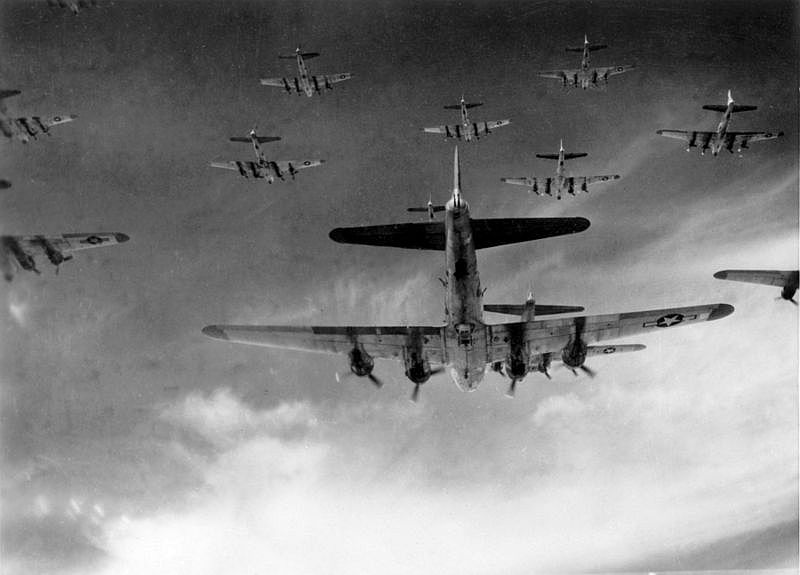

American B-17  bomb German cities
American B-17 roar in the skies on the way to bomb German cities
In some 50 cities that were primary targets of the air attack, the proportion of destroyed or heavily damaged dwelling units is about 40 percent. The result of all these attacks was to render homeless some 7.500.000 German civilians.

Source;
-US Strategic Bombing Survey 1940-1945 


In Europe, the American Eighth Air Force conducted its raids in daylight. USAAF leaders firmly held to the claim of "precision" bombing of military targets for much of the war, and dismissed claims they were simply bombing cities. However the Eighth received the first H2X radar sets in December 1943. Within two weeks of the arrival of these first six sets, the Eighth command gave permission for them to area bomb a city using H2X and would continue to authorize, on average, about one such attack a week until the end of the war in Europe.

In reality, the day bombing was "precision bombing" only in the sense that most bombs fell somewhere near a specific designated target such as a railway yard. Conventionally, the air forces designated as "the target area" a circle having a radius of 1000 feet around the aiming point of attack. Survey studies show, In the fall of 1944, only seven per cent of all bombs dropped by the Eighth Air Force hit within 1,000 feet of their aim point.

Allied bombing German cities WW2 Statistics
-----------------------
WAS THE ALLIED BOMBING OF GERMANY SUCCESSFUL?

'There was always at the briefing some military reason given for our attack. It was either a steel-producing town or there was a lot of small industry making precision instruments. But the policy was the destruction of towns. You destroy a town, you hinder the war effort in many ways, and that in itself was the justification. The big mistake was to think that by breaking German morale it would end the war. The morale of the German population was utterly and completely broken, but this had no effect on the hierarchy, the people who were actually directing the war. In the Third Reich the popular voice could not have any influence.
Peter Hinchliffe OBE
Bomber Command
-----------------------------


Source;
-Richard G Davis American Bombardment Policy against Germany, 1942-1945, Air Power Review, Volume 6 Number 3, pp. 49–62. (see p. 54 (PDF 63). http://www.raf.mod.uk/rafcms/mediafi...62250E094B.pdf
-United States Strategic Bombing Survey


During the Second World War, the Allied aerial forces performed air raids civilian populations in Europe and over Japan. These actions were not only defined crimes in retrospect, but were also viewed as such by the leaders of the Axis Powers during the war itself, despite the fact they themselves did likewise. On June 6, 1944, at a conference of top Nazi leaders in Klessheim, the German Minister of Foreign Affairs Joachim von Ribbentrop tried to introduce a resolution to define air raids on civilians as acts of terror, but his motion was rejected.

Source; Trial of German Major War Criminals, vol. 10, pp. 382-383.

Nearing the end of the War, shelter accommodation was available for only about eight million German people. The remainder sheltered in basements, and casualties in these places of refuge were heavy. 


BOMBING OF DRESDEN

The Bombing of Dresden was a military bombing by the United States Army Air Force (USAAF) & the British Royal Air Force (RAF) as part of the allied forces, between 13 February and 15 February 1945 in the Second World War. In four raids, 1,300 heavy bombers dropped more than 3,900 tons of high-explosive bombs and incendiary devices on the city, the Baroque capital of the German state of Saxony. The resulting firestorm destroyed 15 square miles (39 square kilometres) of the city centre.


Dresden after  American British bombimg
Dresden after the American and British bombers had done their job

As the flames subsided, the residents of Dresden discovered that 24,866 out of the 28,410 houses in the inner city were destroyed - an area of total destruction extending over eleven square miles. As for the death toll, German authorities gave up trying to work out the precise total after some 35,000 bodies had been recognized, labeled, and buried while hundreds of cellars and air raid shelters remained unopened. 

There was far too great a risk for the spread of disease to allow the proper identification of the dead. So, a massive funeral pyre was constructed in the Altmarkt where thousands more were burned.


Mass cremation German civilians killed
Mass cremation of German civilians killed
---------------------
'Bomber Command was the only weapon we possessed. Bomber Command was available and had to be used every day and every night, weather permitting. Had that force been available and Churchill had got up and said, in the House of Commons, "Well, we have this large bomber force available, but I'm afraid we mustn't use it because as it operates at night we can't be sure of hitting specific targets, and women and children may get killed", the British people would have been outraged and they would have said, "Not attack them because civilians might get killed? Have you gone mad? Hitler's been killing civilians all over Europe, including England." If Churchill had said that he wouldn't have survived as Prime Minister. Morality is a thing you can indulge in an environment of peace and security, but you can't make moral judgements in war, when it's a question of national survival.'

Charles Patterson,
Bomber Command pilot
-------------------------------

Charred remains Dresden people killed fire bombing
This is what remained of the people of Dresden
With such a large amount of undocumented refugees in the city, coupled with the number of people who were outright incinerated or ripped apart by the violent winds, it is impossible to come up with an exact casualty figure. Some scholars have claimed that approximately 30,000 perished, but this estimate is far too low. Even the German authorities who, a few days after the attack, put the total somewhere between 120,000 and 150,000 could have underestimated the final amount. By way of clarification, on the night of the raid, there were approximately 1,250,000 people in the city. After the fire storm subsided, there were just under 370,000. Certainly, the majority of the 800,000 refugees were successful in fleeing Dresden? However, it is entirely justifiable to assume that approximately one quarter of these individuals actually perished in the flames. Therefore, an amount which was closer to reality, which according to American historians was mere propaganda, was provided by Dr. Goebbels -- 260,000. 

Stars & Stripes
London Edition, Saturday, May 5, 1945, Vol. 5, No. 156 

Air Raid on Dresden Killed More Than 300,000 
by Dan Regan
Stars and Stripes Staff Writer 

With the 1st Army, May 3 (Delayed) -- The Allied air raid on Dresden on Feb. 13-14 killed 300,000 persons, according to a report by Dresden police to a group of 600 -- British and French -- prisoners who were given passes by the Germans to enter the American lines. 

Nine British PWs were working in Dresden during the raid and said the horror and devastation caused by the Anglo-American 14-hour raid was beyond human comprehension unless one could see for himself. 

One British sergeant said,

"Reports from Dresden police that 300,000 died as a result of the bombing didn't include deaths among 1,000,000 evacuees from the Breslau area trying to escape from the Russians. There were no records on them. 

"After seeing the results of the bombing, I believe these figures are correct."

"They had to pitchfork shriveled bodies onto trucks and wagons and cart them to shallow graves on the outskirts of the city. But after two weeks if work the job became too much to cope with and they found other means to gather up the dead." 

"They burned bodies in a great heap in the center of the city, but the most effective way, for sanitary reasons, was to take flamethrowers and burn the dead as they lay in the ruins. They would just turn the flamethrowers into the houses, burn the dead and then close off the entire area. The whole city is flattened. They were unable to clean up the dead lying beside roads for several weeks," the sergeant added.


THE BOMBING OF HAMBURG

The attack during the last week of July, 1943, Operation Gomorrah, created one of the greatest firestorms raised by the RAF and United States Army Air Force in WWII, killing 42,600 civilians and wounding 37,000 in Hamburg and practically destroying the entire city. The unusually warm weather and good conditions meant that the bombing was unusually concentrated around the intended targets and also created a vortex and whirling updraft of super-heated air which created a 1,500-foot-high tornado of fire, a totally unexpected effect. Various other previously used techniques and devices were instrumental as well, such as area bombing, Pathfinders, and H2S radar, which came together to work particularly effectively. 'Window' was successfully used for the first time - clouds of shredded tinfoil dropped by Pathfinders as well as the initial bomber stream - in order to completely cloud German radar. The raids inflicted severe damage to German armaments production in Hamburg.

Hamburg ruins after Allied bombings
This is what remained of Hamburg after the bombing
Bombing of Pforzheim in World War II

During the latter stages of World War II, Pforzheim, a town in southwestern Germany, was bombed a number of times. The largest raid, and one of the most devastating area bombardments of the war was carried out by the Royal Air Force (RAF) on the evening of February 23, 1945. 31,4% of the town's population, up to 17,600 people, were killed in the air raid. About 83% of the town's buildings were destroyed, two-thirds of the complete area of Pforzheim and between 80 and 100% of the inner city.


The Bombing of Kassel.

In 2003 A ceremony was been held in the central German town of Kassel, marking the 60th anniversary of an allied bombing raid that claimed more than 10,000 lives in a single night. The event, at which eye-witnesses relived the horror of that night, with a book been published with shocking photographs of German air raid victims which have never been seen before. Mr Friedrich collected the photos from town archives across Germany while touring the country last year presenting a book about the Allied bombing. 


-------------------
War is horrible; war is immoral. But you fight it the way you can. Look what happens to innocent civilians when armies roll across great territories and take cities. How many civilians died at Stalingrad? Outside Moscow? Or Leningrad? We were fighting one of the most immoral entities on the planet, and we had to fight it the best way we could. I just cannot and will never accept that bombing Germany was immoral.'
Air Marshal Sir John Curtiss KCB KBE
Bomber Command navigator
-------------------------------

Share this PostPin ThisShare on TumblrShare on Google PlusEmail This

Some Facts of WW2 That We Hardly Know

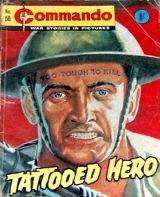
Commando comics WW2
As we read and go deeper into what happened in the years 1939-45, a lot of our illusions shatter. May be because we all  got acquainted with WW2 from movies and "Commando" comics, which paint rosy pictures of American and British soldiers, showing them as good men who fight bravely against the evil "Krauts".

The reality is different.

The reason the Allies took almost a year after landing on Normandy on June 6, 1944 to defeat Germany was that many soldiers were not motivated enough to fight It is a well known fact that British and American soldiers moved forward only after the enemy lines had been flattened by a lot of artillery fire. Unlike the German or Russian soldier who went ahead, without waiting for artillery or tank support.

There were a lot of desertions. In the German or Russian army they would have been shot.

British soldiers captured by Germans 1944

Allied commanders were cautious and hesitant to act quickly. If Eisenhower had reacted fast after the Germans were on the run from France, the Allied armies would have reached Berlin by December 1944.

Montgomery and Eisenhower
Montgomery was on his own ego-trip and came up with the hare-brained Operation Market Garden which achieved little but cost a lot of airborne troops. Eisenhower indulged him because he wanted to keep British-American relations cordial.

The only Allied general that the Germans too respected was Patton. If he had been in place of Eisenhower Germany would have been defeated before the red Army could enter east Prussia. The problem with Patton was, he would have led to a massive row with the British and also he was anti-Jew.

After 1944, the Americans turned a deaf ear to what Churchill said. Churchill wanted Allies to land in Greece and move into the Balkans before the Russians did. If such a thing had happened The Americans would have had to fight not only Germans but the Red Army too.  America hardly had enough troops to do that as it was busy fighting Japan too.

A clash between the Allies and Russia would have been catastrophic. Hitler knew the friction and was hoping for the friction to lead to an explosion.

But wiser counsel prevailed. Thankfully. The Americans knew that Russia was shedding the blood necessary to defeat the formidable German Army. Alone it seems unlikely that American or British soldiers would have been prepared to fight the savage war that raged in the Ostfront. Only the Russians could have done that.

German POW In Russia

Democracies by nature have little martial tradition and their soldiers are not moulded  to fight absolute war that the Wehrmacht or the Red Army fought during WW2. It was Russian blood and America's immense arms production that defeated Nazi Germany.

British commando
German soldier Eastern FrontThis is not to say that American soldiers are soft. The War in the Far East with Japan proved beyond doubt that the American soldier was as hard as the Japanese soldier and could take a lot of beating. Only that more American blood would have been shed to defeat both Japan and Nazi Germany if the Russians had caved in in 1941-42. It would have taken a lot more time to defeat Hitler, if ever. If Russia had collapsed and if there had been no Stalingrad, Hitler would have got his hands on the plentiful oil lying under the ground in the Soviet Union.

Perhaps then America's massive arms production would have been of little use in defeating Hitler. Because as a soldier, the German was undoubtedly the best fighting machine mankind has ever seen.

Coming to America's war with Japan. After the Marianas Islands were captured after brutal fighting in 1944, America had a base from which it could launch massive bombing operations on Japan with B-27 bombers. The Japanese Navy had largely been annihilated. American aircraft-carriers and ships ruled the seas. American submarines had knocked the stuffing out of Japanese supply lines .

General MacArthur
So there was little need to launch combat operations to take over Japanese held islands in a hurry. With no supplies of arms or men the Japanese soldiers on different islands could do little harm. The focus should have been bombing Japan proper to dust. The Japanese would have then capitulated.

But General MacArthur, was like Montgomery, a publicity seeker and a vain man. He wanted to make frontal attacks and liberate Philippines where he had spent many years. He went ahead though militarily there was no need to do so because he was a media's hero and enjoyed massive popularity back in America. Roosevelt dared not sack him. So the bloody fight for the Philippines ensued with massive loss of American lives and those of the local inhabitants.

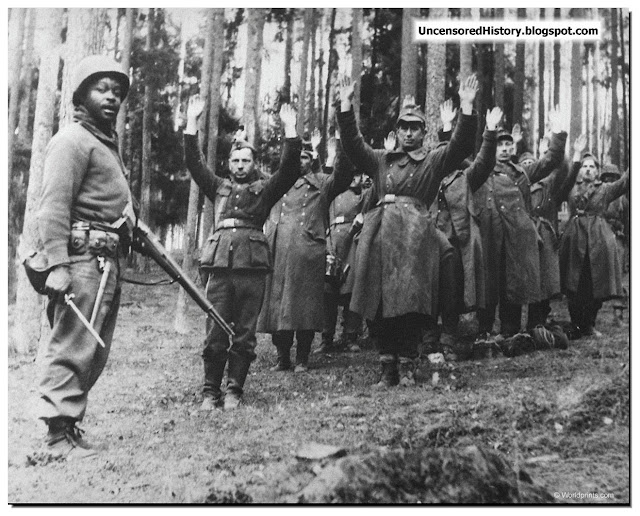
Germans captured by Americans
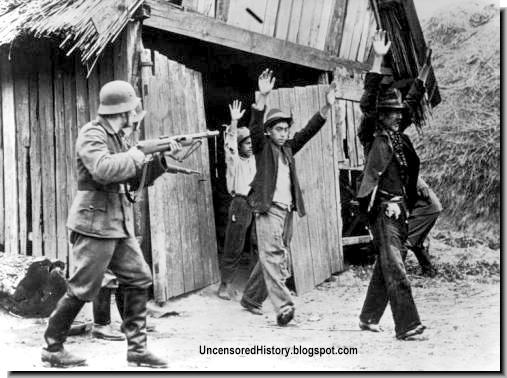
A popular myth is that only German and Soviet  soldiers acted brutally and took no prisoners. That American and British soldiers in contrast were 'humane'. The good guys who followed the Geneva Conventions to the G. This is just propaganda. There are lots and lots of instances where Allied soldiers took no prisoners and shot German POW straight away. This despite the fact that most American soldiers did not hate the Germans, as say the Russians did. In contrast, a few instances aside, German soldiers while dealing with American and British POW behaved very properly.


British Bomber Command  headed by Sir Arthur Harris from 1942
The infamous British Bomber Command was headed by Sir Arthur Harris from 1942. Harris believed that bombing and terrorising German cities and civilians would demoralise them and Germany would lose the war. So he went about the task enthusiastically and by April 1945 all German cities had been blown to bits. Harris' thinking was criticized by many as being not a war-winning one. They felt bombing military and war production plants would be more helpful. But so popular was Harris amongst the British public that no one dared to stop him.

Hindsight revealed that bombing did not demoralise the German people so much that the country surrendered. The bombings by the British Bomber Command and the US Eight Air Force did serve one purpose. Hitler was forced to strip Russia of most of Luftwaffe planes to defend German cities. Also the formidable German 88 mm guns were diverted from the Ostfront. This greatly helped the Red Army.
Share this PostPin ThisShare on TumblrShare on Google PlusEmail This
Related Posts Plugin for WordPress, Blogger...
Advertisement

Popular Articles On This Site

UncensoredHistory.blogspot.com

UncensoredHistory.blogspot.com