The Battle of Stalingrad ended in a disaster for the Germans. Many died, many survived as POW only to die later in Russian captivity. Stalingrad in January-February 1943 was a vision from hell. There was a witness who saw the end of the German Sixth Army. A British correspondent, Alexander Werth. Here is what he says in his book."Russia At War: 1941-1945" . Below is an adaptation.
I remembered the long and anxious days of the summer of 1942, and the London night blitz, and photographs of Hitler, grinning on the steps of the Cathedral of the Madeleine in Paris, and the dreary days of 1938 and 1939., When Europe nervously caught Berlin radio and listened to the cries of Hitler, accompanied by the cannibal German roar of the crowd. And I saw a sign of severe, but divine justice in these frozen cesspools in these gnawed horse skeletons and yellow corpses of Germans starved to death in the courtyard of the Red Army in Stalingrad
----------------------------
MASSACRE OF GERMAN SOLDIERS
In the dining room for the pilots, where we had to wait for a long time there were three Soviet correspondents in uniform - Olender of "Red Star", Rozovskii of "News" and another one whose name I forgot. They had occasionally visited Stalingrad. Olender told about Gumrak, a village west of Stalingrad, where he had witnessed the biggest carnage of Germans he had ever seen. "The earth was literally littered with corpses. We surrounded them tightly, and then our "Katyusha" opened fire. God, it chopped them up! The Germans there had thousands of trucks, cars - mostly dumped into gullies, as they had neither the time nor the means to destroy them, thousands of guns. 60-70 percent of the trucks and guns can still be repaired and put to use again ... We even took the food warehouse and ate heartily for the last five days! I suppose Germans must have really grieved! "MASSACRE OF GERMAN SOLDIERS
----------------------------
A RUSSIAN CIVILIAN AT STALINGRAD
A RUSSIAN CIVILIAN AT STALINGRAD
"In the villages, which survived in the territory surrounded by German forces - and some villages still survived - it was a terrible, terrible atmosphere - said another source. - Some of the peasants there still remained. Fortunately, most had gone for the Don long before. Even in this small area there were partisans. Well, not partisans, but just desperate people who hid from the Germans and waited for the arrival of our troops. There was one half-crazed old man who took advantage of the general confusion of the Germans - it was an hour before our arrival - he hid in some pit, and from there managed to shoot a dozen Nazis. He had a personal score to settle with them. Germans had not raped his daughters. Must be something else. Whatever was the case, I just never found out. "
---------------------------------
DEAD GERMANS
A gruff captain with a drooping mustache who had just entered the room joined the conversation. He told me that the Germans threw a huge amount of equipment in the Nursery and at the airport near where the fighting had been very stubborn. There were a lot of German pillboxes, which were eventually suppressed with powerful artillery fire and "Katyusha"."Now there the land is dotted with thousands of frozen corpses Krauts. Our guns also broke almost all the aircraft stationed at the airport, including a number of "Junkers-52 ..."
------------------------------
CANNIBALISM AMONGST RUSSIAN POW
Next door - he continued - we found a camp for Soviet prisoners of war, under the open sky. Yes, under the open sky ... It is surrounded by barbed wire. The horror! First, there were 1,400 people, whom the Germans forced to build fortifications.Of these only 102 survived. You say that the Germans themselves had nothing to eat, but the prisoners were made to starve long before the German troops were surrounded. Unfortunately, when our soldiers found several half-dead men lying among the many frozen corpses, they immediately began to feed on them with bread and sausage, and as a result some of them died ... "
----------------------------------
GOING TO MEET THE CAPTURED GERMAN GENERALS
The next morning we drove to another village. We drove for about an hour in the snowy steppes. The temperature was 20 degrees below zero. We were not told the name of the village, and the reason for such secrecy was obvious: we had to meet with the German generals. What if there suddenly German paratroopers landed to take a desperate attempt to free them (even though it was unlikely), or a German soldier could suddenly decide to throw a bomb at his generals and thus do away with them because they were no longer able to bring any good to the Reich and maybe even be a hindrance?
-----------------------------------
THE GERMAN GENERALS
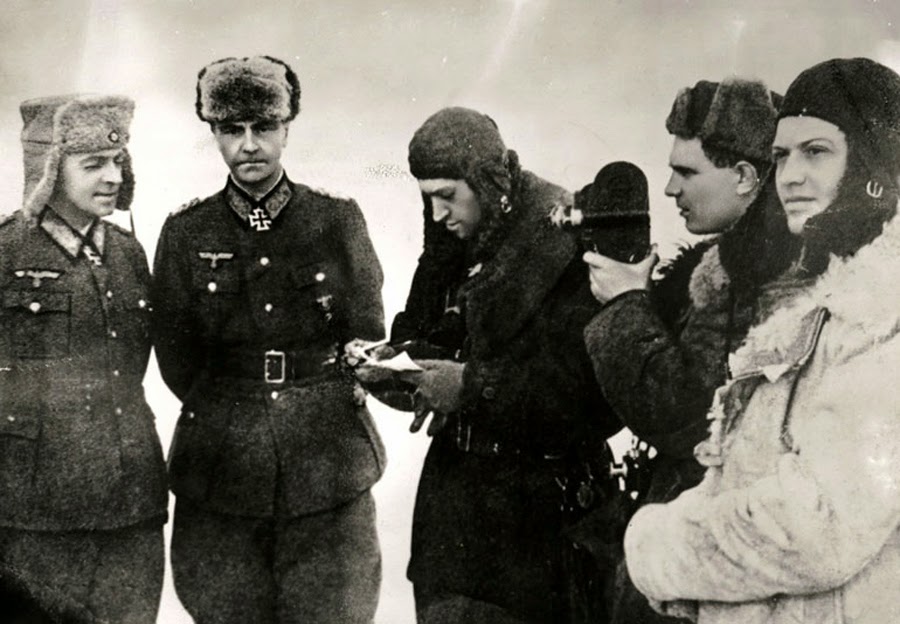
German generals had been put in four huts. We could not enter the huts, so could not talk to them - if any of them wanted to talk to us - he had to come through the door, and stand in the hallway. Some Germans tried to stay away from the door. They sat or stood, with their backs to us. All this looked a bit like a zoo, where some animals showed interest to the public, while others huddled in gloomy corners. Of those who kept themselves at a distance, some of of them turned around to the door from time to time and glanced at us fiercely.
The first thing that caught my eye - the medals and. crosses on their uniforms. Some wore monocles. They were like Erich von Stroheim cartoons, it was hard to believe they were real German generals. However, some of the Germans behaved very differently. Some tried not to get discouraged.
General von Seydlitz - the one who was to soon play an important role in the creation of a Committee called "Free Germany" - tried to look at things with humor. He was as well behaved as General Desbois. He smiled and, as if to ensure that we were not put off, said that he was not a German, but an Austrian. General von Schlemmer also smiled and said: "Well, so you want to know?" The familiar pat on the shoulder of one of the Soviet officers who accompanied us and pointing to his new epaulets, he asked: "What - new?" On his face was written comic surprise, and he nodded approvingly, as if to say: "Well, now you seem to have become a real army."
------------------------------------------
GENERAL VON ARNIM
One of the sulking ones in the background then said something about hunger and cold. When somebody suggested that the Russian Army was perhaps better than the German Army and certainly better led, von Arnim snorted and went almost purple with rage. I then asked how he was being treated. Again he snorted. "The officers," he said reluctantly, "are correct. But the Russian soldiers— das sind Diebe, das sind Halunken. So eine Schweinerei!" He fumed. "Impudent thieves! They stole all my things. Eine Schweinerei!" Vier Koffer! Four suitcases, and they stole them all. The soldiers, I mean," he added as a concession. "Not the Russian officers. Die Offiziere sind ganz korrekt," These people had looted the whole of Europe; but what was that compared with his four suitcases?
When a Chinese correspondent asked about Japan, he said stiffly, with another devastating glare: "We immensely admire our gallant Japanese allies for their brilliant victories over the English and the Americans, and wish them many more victories." Then he was asked what all those crosses and mantelpiece ornaments were, and he rattled them off one after another—the golden frame with the black spider of a swastika was, he said, the Deutsche Kreuz in Gold, and the Führer himself had designed it. "One would have thought that you'd have a slight grudge against the Führer," somebody suggested. He glared and merely said: "The Führer is a very great man, and if you have any doubts, you will soon have occasion to put them aside." The man was one of the few German generals who was to keep completely aloof, during the rest of the war, from the Free German Committee.
When a Chinese correspondent asked about Japan, he said stiffly, with another devastating glare: "We immensely admire our gallant Japanese allies for their brilliant victories over the English and the Americans, and wish them many more victories." Then he was asked what all those crosses and mantelpiece ornaments were, and he rattled them off one after another—the golden frame with the black spider of a swastika was, he said, the Deutsche Kreuz in Gold, and the Führer himself had designed it. "One would have thought that you'd have a slight grudge against the Führer," somebody suggested. He glared and merely said: "The Führer is a very great man, and if you have any doubts, you will soon have occasion to put them aside." The man was one of the few German generals who was to keep completely aloof, during the rest of the war, from the Free German Committee.
THE DIGNITY OF PAULUS
One thing was astonishing about these generals. They had been captured only a couple of days before—and yet they looked healthy and not at all undernourished. Clearly, throughout the agony of Stalingrad, when their soldiers were dying of hunger, they had continued to have more or less regular meals. There could be no other explanation for their normal, or almost normal, weight and appearance.
The only man who looked in a poor shape was Paulus himself. We weren't allowed to speak to him [ I later learned that he had firmly refused to make any statement.]; he was only shown to us so that we could testify that he was alive and had not committed suicide. He stepped out of a large cottage—it was more like a villa— gave us one look, then stared at the horizon, and stood on the steps for a minute or two, in a rather awkward silence, with two other officers, one of whom was General Schmidt, his chief of staff. Paulus looked pale and sick, and had a nervous twitch in his left cheek. He had a more natural dignity than the others, and wore only one or two decorations. The cameras clicked and a Russian officer politely dismissed him, and he went back into the cottage. The others followed and the door closed behind him. It was over.
The only man who looked in a poor shape was Paulus himself. We weren't allowed to speak to him [ I later learned that he had firmly refused to make any statement.]; he was only shown to us so that we could testify that he was alive and had not committed suicide. He stepped out of a large cottage—it was more like a villa— gave us one look, then stared at the horizon, and stood on the steps for a minute or two, in a rather awkward silence, with two other officers, one of whom was General Schmidt, his chief of staff. Paulus looked pale and sick, and had a nervous twitch in his left cheek. He had a more natural dignity than the others, and wore only one or two decorations. The cameras clicked and a Russian officer politely dismissed him, and he went back into the cottage. The others followed and the door closed behind him. It was over.
-------------------------------------------------
THE VOLGA
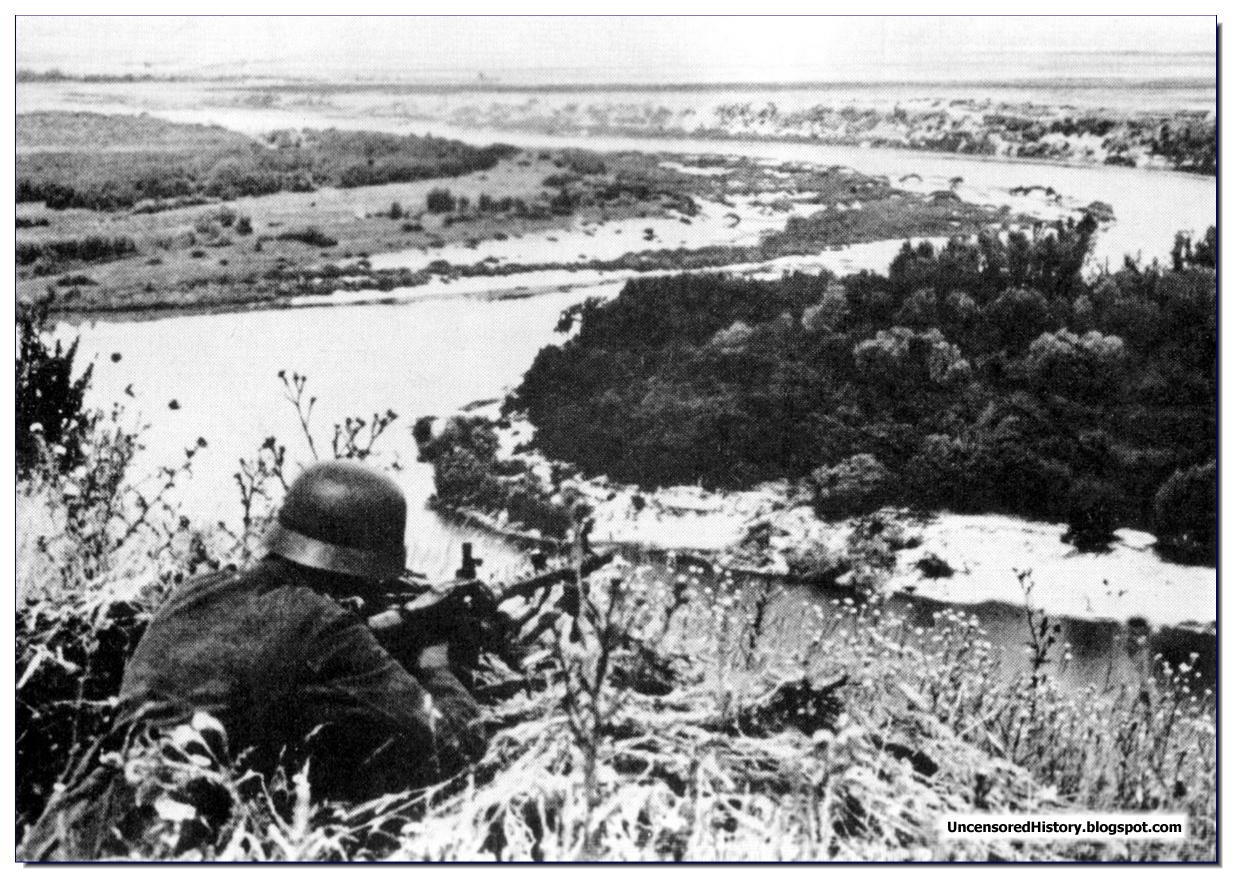
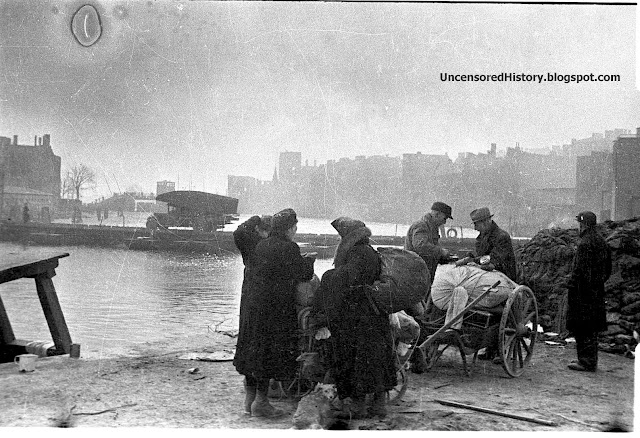
At length we drove off, down towards the Volga, through the wreckage of the Garden City and past some smashed warehouses and railway buildings. The wind from across the Volga had swept much of the country bare, and the earth was deadly-frozen with patches of snow here and there, and a pale-blue sky above. A few frozen dead Germans were still lying by the roadside. We crossed the railway-line. Here were railway carriages and engines piled on top of each other, in an inextricable tangle of metal. High cylindrical oil tanks standing alongside the battered railway-line were crumpled up like discarded old cartons and riddled with shell-holes, and some had fallen down completely. On the other side of the road was a honeycomb of trenches and dugouts and shell-holes and bomb craters; and then, beyond the railway, the road made a sharp hairpin bend, and before us was the white icebound Volga, with the misty bare trees of the delta-land on the other side, and, beyond it, the white steppes stretching far into Asia.
The Volga! Here was the scene of one of the grimmest episodes of the war: the Stalingrad lifeline. The remnants of it were still there: those barges and steamers, most of them smashed, frozen into the ice. Now a thin trickle of traffic was calmly driving across the ice: cars and horse-sleighs, and some soldiers on foot. The Volga was frozen over, but not entirely—not even after the fierce frost of the past fortnight. There were still a few shining blue patches of water, from which women were carrying pails. We drove down from the cliffs to the Volga beach, crowded with hundreds of German "trophy" cars and lorries, and were now on Russian soil that the enemy had never taken.
The Volga! Here was the scene of one of the grimmest episodes of the war: the Stalingrad lifeline. The remnants of it were still there: those barges and steamers, most of them smashed, frozen into the ice. Now a thin trickle of traffic was calmly driving across the ice: cars and horse-sleighs, and some soldiers on foot. The Volga was frozen over, but not entirely—not even after the fierce frost of the past fortnight. There were still a few shining blue patches of water, from which women were carrying pails. We drove down from the cliffs to the Volga beach, crowded with hundreds of German "trophy" cars and lorries, and were now on Russian soil that the enemy had never taken.
------------------------------------------------------------------------------
DEAD GERMANS
DEAD GERMANS
After visiting the scene of Paulus's surrender and talking to Lieutenant Yelchenko who had captured the Field-Marshal, we went out into the street again. Everything around was strangely silent. The dead German with his leg blown off was still lying some distance away. We crossed the square and went into the yard of the large burned-out building of the Red Army House; and here one realised particularly clearly what the last days of Stalingrad had been to so many of the Germans. In the porch lay the skeleton of a horse, with only a few scraps of meat still clinging to its ribs. Then we came into the yard. Here lay more horses' skeletons and, to the right, there was an enormous horrible cesspool—fortunately frozen solid.
And then, suddenly, at the far end of the yard I caught sight of a human figure. He had been crouching over another cesspool, and now, noticing us, he was hastily pulling up his pants, and then he slunk away into the door of a basement. But as he passed, I caught a glimpse of the wretch's face—with its mixture of suffering and idiot-like incomprehension. For a moment, I wished the whole of Germany were there to see it. The man was perhaps already dying. In that basement into which he slunk there were still two hundred Germans—dying of hunger and frostbite. "We haven't had time to deal with them yet," one of the Russians said. "They'll be taken away tomorrow, I suppose." And, at the far end of the yard, beside the other cesspool, behind a low stone wall, the yellow corpses of skinny Germans were piled up—men who had died in that basement—about a dozen wax-like dummies. We did not go into the basement itself— what was the good? There was nothing we could do for them.
And then, suddenly, at the far end of the yard I caught sight of a human figure. He had been crouching over another cesspool, and now, noticing us, he was hastily pulling up his pants, and then he slunk away into the door of a basement. But as he passed, I caught a glimpse of the wretch's face—with its mixture of suffering and idiot-like incomprehension. For a moment, I wished the whole of Germany were there to see it. The man was perhaps already dying. In that basement into which he slunk there were still two hundred Germans—dying of hunger and frostbite. "We haven't had time to deal with them yet," one of the Russians said. "They'll be taken away tomorrow, I suppose." And, at the far end of the yard, beside the other cesspool, behind a low stone wall, the yellow corpses of skinny Germans were piled up—men who had died in that basement—about a dozen wax-like dummies. We did not go into the basement itself— what was the good? There was nothing we could do for them.
--------------------------------------------
DEATH AND DESTRUCTION
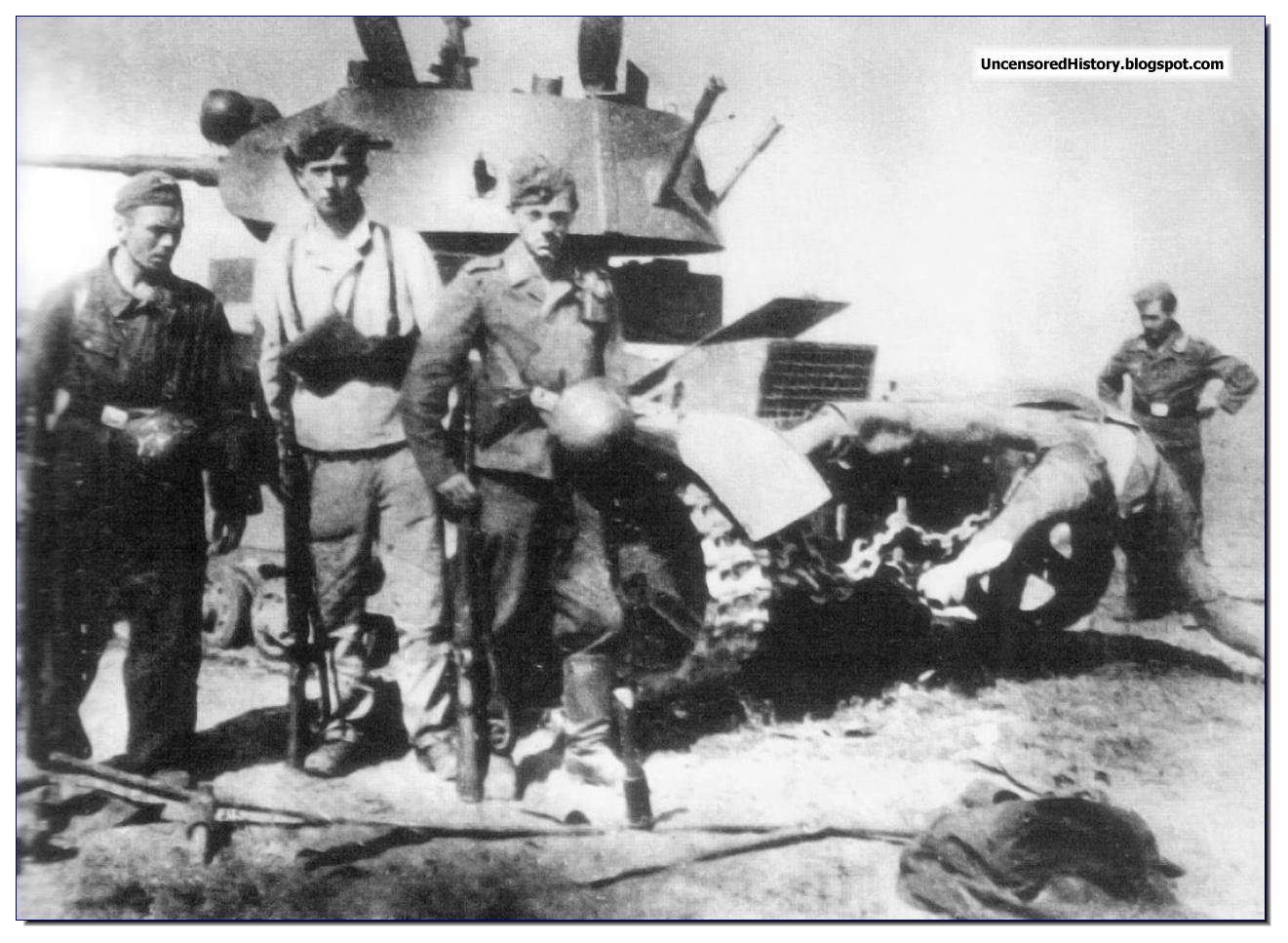
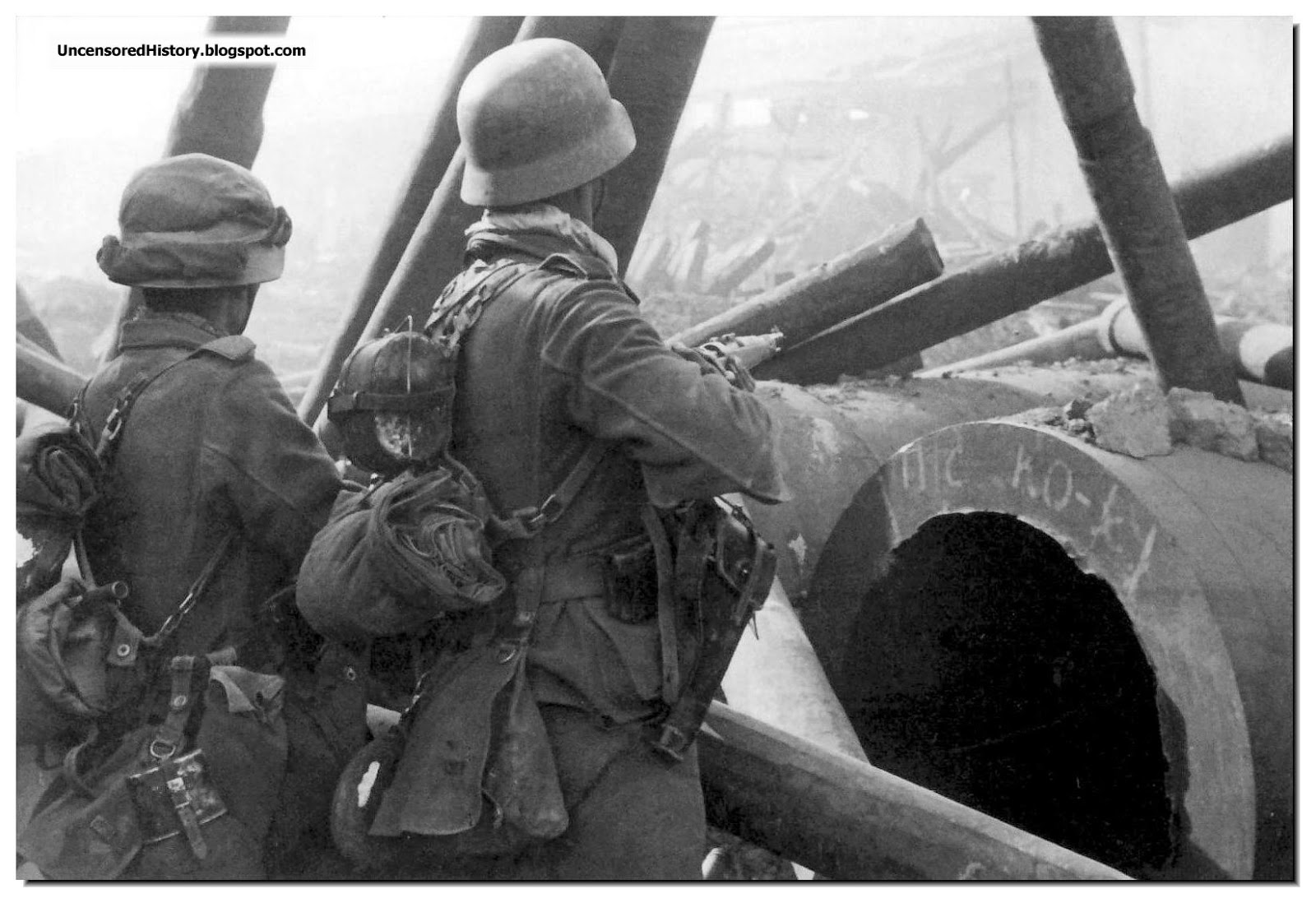
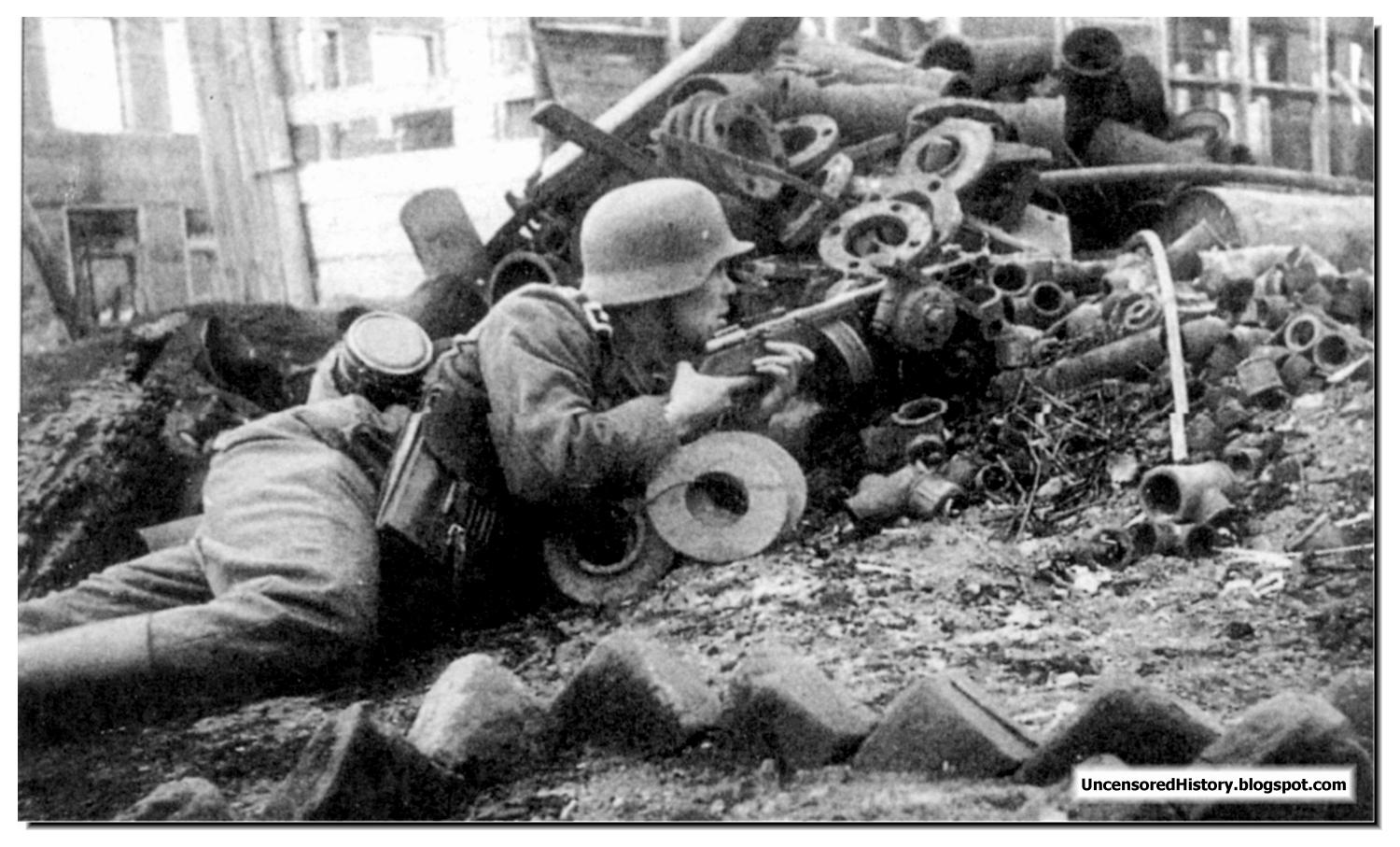
In and around the Red October Plant fighting had gone on for weeks. Trenches ran through the factory yards and through the workshops themselves; and now at the bottom of the trenches there still lay frozen green Germans and frozen grey Russians and frozen fragments of human shapes; and there were helmets, Russian and German, lying among the brick debris, and now half-filled with snow. There was barbed wire here, and half uncovered mines, and shell cases, and tortuous tangles of twisted steel girders. How anyone could have survived here was hard to imagine; and somebody pointed to a wall, with some names written on it, where one of the units had died to the last man. But now everything was silent and dead in this fossilised hell, as though a raving lunatic had suddenly died of heart failure.
It was still 30° below zero. That afternoon we also went up the deadly slopes of Mamai Hill along a narrow path about 100 yards long. Already on the summit the Russians had erected a rough wooden obelisk painted bright-blue, with a red star on top. Among the fractured stumps of fruit-trees lay more helmets, and shell-cases, and shell splinters and other metal junk. There were patches of snow on the ploughed-up frozen ground, but no dead except for a solitary large head, completely blackened with time, and its white teeth grinning; had he been a Russian or a German? A major said that the Russians had been buried, but that 1,500 Germans were still stacked up on the other side of the hill. How many thousands of shells had pierced this ground where only six months before the water-melons were ripening? A Russian tank was standing there, half-way up the hill, facing the summit, and burned-out.
We walked down the main avenue running south, between enormous blocks of burned out houses, towards the other square. In the middle of the pavement lay a dead German. He must have been running when a shell hit him. His legs still seemed to be running, though one was now cut off above the ankle by a shell, and, with the splintered white bone sticking out of the frozen red flesh, it looked like something harmlessly familiar from a butcher's window. His face was a bloody frozen mess, and beside it was a frozen pool of blood.
We walked down the main avenue running south, between enormous blocks of burned out houses, towards the other square. In the middle of the pavement lay a dead German. He must have been running when a shell hit him. His legs still seemed to be running, though one was now cut off above the ankle by a shell, and, with the splintered white bone sticking out of the frozen red flesh, it looked like something harmlessly familiar from a butcher's window. His face was a bloody frozen mess, and beside it was a frozen pool of blood.