Showing posts with label American soldiers. Show all posts

American Soldiers Raped German Women During WW2

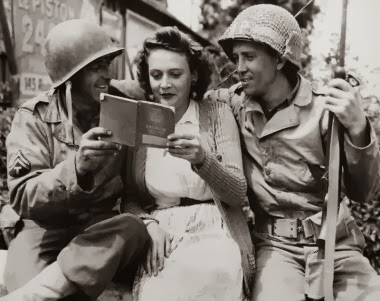
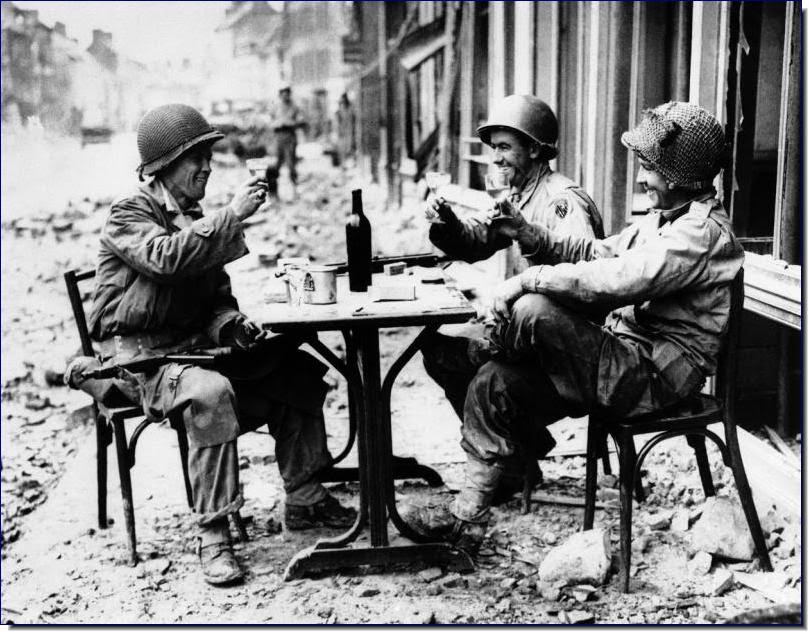
American soldiers GIs ww2 army rapists
American soldiers during the Second World War: An Army Of Rapists?

The Americans have got off lightly as compared to the Russians when the discourse turns to mass rape of German women during WW2. When we hear of "Rape...German women...WW2" we inevitably hear of the ugly, shoddily dressed, often Mongoloid Red Army soldiers.


This is a misconception.

GIs were no saints when compared to the Red Army soldiers where violating hapless German women was concerned. The average Russian soldier did not have the goodies to entice women. American servicemen had only to offer chocolates and cigarettes to make a starving Frau submit  to them. 

The important fact is that despite this handy weapon many of them raped says a lot of their mentality.

Another important point is that their commanding officers just looked the other way when instances were brought to their notice. Maintaining the prestige of their unit was more important than protecting a German women or disciplining their rowdy fighters. Their thinking was "those folks deserve it anyway". A typical mindset of a victor. Whether it be "gooks" in Vietnam or "yellow bastards" in the WW2 Pacific War. The end result is more Abu Ghraibs.

France was an ally but that did not stop American soldiers from dishonoring 3600 French women. This is according to official records. The actual figure is bound to be much higher.

american soldiers Red army german women violated honor
American soldiers were almost as bad as the Russian soldiers when it came to exploiting German women during and after WW2


INSTANCES OF RAPES

In Sprendlingen, near frankfurt, a German women named Katherine and her teenage daughter Charlotte were gangraped by soldiers who burst into their house at night.

A German priest called Michael Merxmuller at Berchtesgaden kept a journal of the events of that time. On July 20,1945  he recorded that eight women and girls were raped. Many while their parents watched.

Andreas Vayngand a priest from the village of Hag-on-amperes recorded that on June 25 "very drunk Americans committed three rapes: one married woman, a spinster and innocent girl 16.5 years."

By order of the military command the residents had to hang on their doors lists of residents and their age - said in a memorandum dated 1 August 1945 according to the priest Alois Moozburga Shimla.  What brought this order, it is easy to guess:  17 girls and women were raped several times. " We also know that the youngest victim of the Americans was only  7 years, and the most elderly - 69.

German women raped Allied American soldiers WW2  Als die Soldaten Kamen Miriam Gebhardt

RENEWED FOCUS ON RAPE BY AMERICAN SOLDIERS

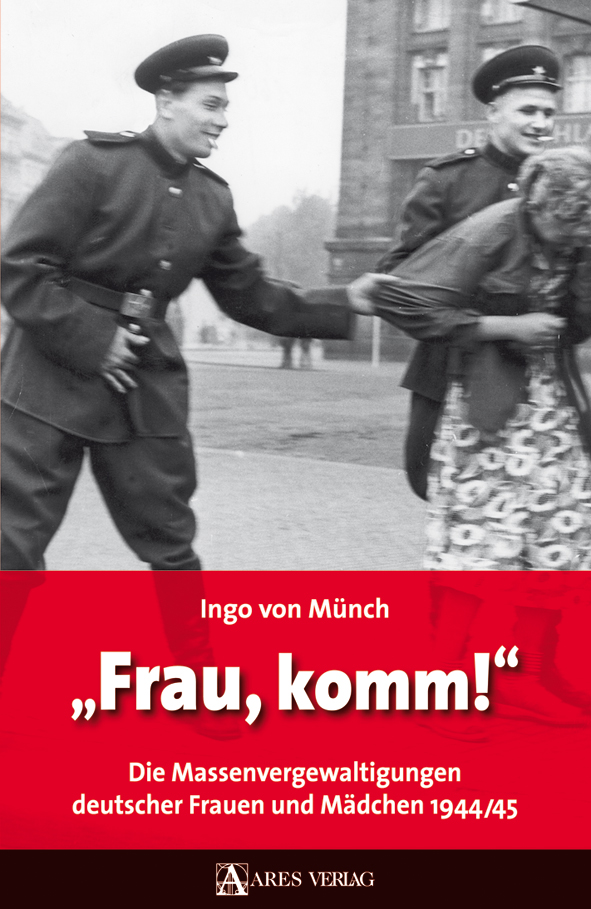
The subject of mass rape of German women during the Second World War by Allied soldiers, especially American soldiers warmed up again after the publication of a German book 'Als die Soldaten kamen' by Miriam Gebhardt in early 2015. 

The author in it says the rapists came not only from the east but west also. That more than 8,60,000 German women and girls were violated by American GIs. Sickeningly she also says that German men and boys too were raped.

The terrible deeds occurred not only in the Soviet sector but also in American, British and French sectors of occupied Germany. It happened for days on end.

Rapes by American soldiers were less reported by the victims for two reasons. They were unwilling to speak out against the 'liberators'. Secondly, Goebbelsian propaganda had labeled only the Soviet soldiers as the 'bad guys' near the end of the conflict.

The agony that German women suffered at the end of WW2 remains under-reported in non-German Western media and the victims have not received any compensation.

------------------

The figure of 190,000 is very modest. Australian war correspondent Osmar White accompanied since 1944 3rd US Army General Patton and his diaries recorded the impressions and all the information. He actively criticized the policies of the Allies in the west zone of occupation, gave examples of mass rape of German women. And not only black Americans but also white. He says that there was a lot of rape committed by fighting American soldiers in Germany. The occurrence differed from unit to unit, depending on the commanders.

Silent no more erika vora personal accounts german victims


Erika Vora in her book "SILENT NO MORE, Personal Narratives Of German Women Who Survived WW2" writes of another incident where a couple of GIs motioned a German women at gunpoint to go into a nearby wood with them. When she repeatedly refused she was shot in the leg and left to die by the roadside until a passing German man took her to a hospital.

The Allies did not take the mass rape of German women with any seriousness. In  the Nuremberg Trial Proceedings document there is a 732 page index. "Looting" has 3 pages. There is not a single mention of rape or crimes against women in the index.

The numerous ravages committed by American soldiers busts the long held myth that there was no need of coercion as German women were readily enticed by a bar of chocolate.

The amorous tendencies of the GIs was not limited to Germany alone. Robert Lilly in his book "Taken By Force" estimates that about 17000 rapes were committed between 1942 and 1945 in Britain, France and Germany. Only 5% of these were reported. And Lilly's estimates are very very conservative.

In conclusion, in the unending discussions on the Second World War, there is little mention of the plight of the German women at the end of WW2. 70 years later there is no recognition of the crime, no apologies made, either by the Russians or the Americans.

And research on this subject is being done only in Germany. Why are there no books by American and British historians, academics and writers? One can count only one book, Mary Louise Roberts book "What Soldiers Do: Sex And The American GI In World War 2 France". Nothing else. There is of course Robert Lilly's "Taken by Force: Rape and American GIs in Europe in World War II". But it has racist undertones and it says mainly the black Americans were the bad guys. There are passing mentions in many treatises but not a single book on the mass rape of German women during WW2.

Related...

American Soldiers And French Women

Brutal Mass Rape Of German Women
Share this PostPin ThisShare on TumblrShare on Google PlusEmail This

Mass Rape And Abuse Of French Women By American Soldiers During WW2

American soldier French girl ww2

We generally associate rape during WW2 with the mass rape of German women by the Red Army soldiers. It was said that the American soldiers by comparison were gentlemen. But that merely is a myth. The American soldiers too violated women during WW2 especially French women. If the motivation for rape for Russian soldiers was revenge for what the German army and SS did in their country, the Americans come through  with an even smaller halo. Their motivation for violating French women was pure hedonism. And the sad part is that the American institutions, the press and the army, too egged them on. Perhaps the aim was to motivate the American soldiers to go and fight the Germans.

A local French saying.....
 "With the Germans, the men had to camouflage themselves -- but with the Americans, we had to hide the women."

Mary Louise Roberts, author of "What Soldiers Do: Sex and the American GI in World War II France"
"The GI's were having sex anywhere and everywhere"


"Once aroused, the GI libido proved difficult to contain" 

The U.S. military has considered the issue of prostitution and rape as a way to establish a form of supremacy. Remember, we are in 1945, the United States emerged as a world power. It was also a time when France, humiliated, realized that she had lost its superpower status. Sex becomes a way 'to ensure U.S. dominance on a secondary power.


GI kisses French girl Paris


-------------------------------------------

The handsome American soldier was Elisabeth’s tenth client that evening. Working her trade on the top floor of a dingy apartment block in Paris, she felt that she had seen them all. 

For the past four years, the men had been Germans, and now, since the city had been liberated in August, 1944, they were Americans. It made little difference.


Elisabeth held out three fingers of her hand to indicate the price of her body — three hundred francs. 


‘Too much,’ said the soldier.


Elisabeth sighed. She had seen that before as well. Wearily, she kept the three fingers held up, almost as an insult. 


There was no negotiation — three hundred was little enough as it was.


‘Two hundred,’ the soldier insisted.


‘Non,’ said Elisabeth. ‘Three hundred or nothing’.


The soldier approached her, hate in his eyes. Elisabeth glowered back, starting to feel scared.


‘In that case,’ said the soldier, ‘it will be nothing.’


The soldier then placed his huge hands around Elisabeth’s neck and started to squeeze. She struggled as hard as she could, lashing out, but it was in vain.


After a minute or so she slumped down, her lifeless body falling on to the stained sheets. The soldier then calmly removed his trousers and had sex with her. For nothing.


Afterwards, he went through Elisabeth’s belongings and stole her cash and jewellery. He then went round the block, found another prostitute and took her to dinner and the movies. 


For the GI, it had been a swell evening. Paris was just as they said it was.


----------------------------------------------------


THE ROLE OF AMERICAN MEDIA

Magazines aimed at the troops such as Stars And Stripes showed pictures of cheering women during liberation parades, accompanied by headlines such as ‘Here’s What We’re Fighting For’. The magazine even published ‘useful’ French phrases, such as the translations for "You have charming eyes," "I am not married" and "Are your parents at home?"It was almost as if the magazine was telling the GIs: come and get it, boys.

A Life magazine issue described France as “a tremendous brothel inhabited by 40,000,000 hedonists who spend all their time eating, drinking (and) making love."

--------------------------------------------------

According to popular media, the image of an American soldier during WW2 is that of a gentleman compared to the brutish, rough Red Army soldier. He did not take advantage of hapless women in Europe, but seduced him with chocolates and other gifts (Especially the starving German women).  But a book by an American women scholar explodes the myth.  In her book Mary Louise Roberts, author of "What Soldiers Do: Sex and the American GI in World War II France" researched the subject and came up with startling revelations.


Here are some gems....


With the landing on Omaha Beach, "a veritable tsunami of male lust" washed over France


After their victory, the soldiers felt it was time for a reward. And when they enjoyed themselves with French women, they were not only validating their own masculinity, but also, in a metaphorical sense, the new status of the United States as a superpower. The liberation of France was sold to the American public as a love affair between US soldiers and grateful French women.


American france ww2


On the other hand, following their defeat by the Germans, many French perceived the Americans' uninhibited activities in their own country as yet another humiliation. Although the French were officially among the victorious powers, the Americans were now in charge.


The subject of sex played a central role in the relationship between the French and their liberators. Prostitution was the source of constant strife between US military officials and local authorities.


Some of the most dramatic reports came from the port city of Le Havre, which was overrun by soldiers headed home in the summer of 1945. In a letter to a Colonel Weed, the US regional commander, then Mayor Pierre Voisin complained that his citizens couldn't even go for a walk in the park or visit the cemetery without encountering GIs having sex in public with prostitutes.

"Scenes contrary to decency" were unfolding in his city day and night, Voisin wrote. It was "not only scandalous but intolerable" that "youthful eyes are exposed to such public spectacles." The mayor suggested that the Americans set up a brothel outside the city so that the sexual activity would be discrete and the spread of sexually transmitted diseases could be combated by medical personnel.

But the Americans could not operate brothels because they feared that stories about the soldiers' promiscuity would then make their way back to their wives at home. Besides, writes Roberts, many American military officials did not take the complaints seriously owing to their belief that it was normal for the French to have sex in public.

But the citizens of Le Havre wrote letters of protest to their mayor, and not just regarding prostitution. We are "attacked, robbed, run over both on the street and in our houses," wrote one citizen in October 1945. "This is a regime of terror, imposed by bandits in uniform."


American GI Kissing French woman
Image Source: New York Times

A café owner from Le Havre expressed the deep French disillusionment over the Americans' behavior when he said: "We expected friends who would not make us ashamed of our defeat. Instead, there came incomprehension, arrogance, incredibly bad manners and the swagger of conquerors."


Sexuality, prostitution and rape were all methods used by Americans to "assert their power on the French."


The average GI ‘had no emotional attachment to the French people or the cause of their freedom’.


Normandy women launched a wave of rape accusations against American soldiers, threatening to destroy the erotic fantasy at the heart of the operation. The spectre of rape transformed the GI from rescuer-warrior to violent intruder.


With the raping and the bombing, it was therefore understandable why some French wondered whether they really had been ‘liberated’ after all.


‘France for the Americans — as well as the Germans — is Paris and women,’ observed another Frenchman, noting that there was little difference between the average GI and average Boche.


French women who worked as prostitutes even looked back on their German clients with something approaching affection. GIs, it seemed, wanted more than just sex.

‘You had to keep an eye on your purse with those bastards,’ one woman recalled. ‘It’s sad to say, but I missed my Fritzes, who were gentler with women. I was not the only one to say it; all the women thought the same as me, only they did not always say it.’

Rumours abounded of particularly horrific stories, including that of a girl who had been hacked to death and then had her corpse violated.


Of the mere 152 American soldiers  who were tried for rape, 139 of the defendants were ‘colored’.


Courts martial were often little more than kangaroo courts, with men sent to the gibbet convicted on the flimsiest of evidence, and tried by officers with little or no legal training.


In addition, another unpalatable truth is that many French women were as racist as the American officers. 

Although we like to think of the men who freed Europe as members of the ‘greatest generation’, and that the Allies had fought a ‘good war’,the true story is a lot more complicated and disturbing.


As they trained for the military operation in the UK, the GIs were motivated by lurid stories of how French women had few morals and would be swift to show their appreciation.

GI promiscuity took place in parks, cemeteries, streets and abandoned buildings in cities. Sexual relations became unrestricted and public; sexual intercourse was performed in daylight before the eyes of civilians, including children.


---------------------------------------

 According to J. Robert Lilly the writer of Taken By Force

Estimate of the number of rapes by U.S. soldiers during the liberation of France?

In the archives of the American military justice, the number of rapes reported by the U.S. military is 181 for France (121 in England, 552 in Germany), and 116 U.S. soldiers were tried for rape in France. But rape is one of the most under-represented in the archives crimes: the number of rapes reported are estimated at 5%. I conclude that the number of rapes in France committed by American soldiers was about 3,500, against 2,500 in the UK and 11,000 in Germany. Rape in Germany represent two thirds of these estimates, but no American soldier was sentenced to death. In the case of England and France, it is therefore of sexual crimes in times of war, whose authors are considered criminals, while in Germany, these acts were considered "war rape "where the circumstances and the nationality of the victims make them somehow" acceptable. "

The profile of the American soldier rapist?

This is not a combat soldier, but mostly supply troops, and the act went on behind the lines, often at night. In 85% of cases, they were not officers and black soldiers. At over 60%, it was gang rape. Of the 116 soldiers tried, 21 were executed in France (publicly hanged) and 67 sentenced to life imprisonment, a sentence made in the United States.

A Case

The first rape which led to a trial in France: June 14, 1944, 4 km southeast of Sainte-Mère-Eglise, Miss S., Polish refugee was raped 300 meters from her home in a field where she would milk the cows, four "colored soldiers" who had previously helped to push a cart. Records indicate that they "had drunk wine." A brief trial was held on June 20, Private Whitfield was sentenced to death, hanged August 14, 1944.

Why these rapes are they misunderstood?

Because they raise three issues. First, they cast a harsh light on those Roosevelt defined as belonging to "the greatest generation any society has ever created." This generation of the victory of 1945, mythologized in the United States, had their faults, like two generations of American soldiers largely demystified, in the Vietnam War, and the Iraq war. Rape raises the sensitive issue of segregation and racism in the U.S. Army rapists were certainly often black, but they were still "over-sentenced" compared to whites, and propaganda specifically warned civilians against them. Finally, the rapes illustrated the stereotype of the French "easy woman", the exciting picture propagated by the GI of a "sexual freedom of French women." General Bradley writes of the "Early fever that gripped the U.S. Army to approach Paris, fueled by incredible stories that made France a place unlike any other in Europe."


Source: Liberaton.fr

Related

American GI And German Women


------------------------------------
Suggested Reading
What soldiers Do book Mary Louise Roberts


Among the most valuable statistics What Soldiers Do contains is that between 1944 and 1945, 29 public executions by hanging were performed as a result of rape convictions. Of those hanged, 25 were African-American soldiers. French women, Roberts insists, were just as culpable as the US military: scapegoating African-Americans was a means of ensuring that someone would be punished for their rapes, if not the exact culprit. “In this way,” she points out, “the French and the Americans became deadly allies in racism.”

Suggested Reading


Taken by force robert lilly


Lilly’s book proceeds to use military records and trial transcripts to study American soldiers’ rapes of some 14,000 civilian women in western Europe. Robert Lilly’s short tome hence becomes a most valuable addition to the literature on World War II, for in examining the subject of rape by U.S. soldiers, a topic that most works on Americans at war avoid, he provides a necessary corrective to the often excessively heroic and exclusively masculine literature of that war in particular, and of war in general, to which so many American authors cling.
John H. Morrow Jr. "Taken by Force: Rape and American GIs in Europe during World War II (review)." The Journal of Military History72.4 (2008): 1324-1324. Project MUSE. Web. 24 Jan. 2013.

References

Der Spiegel
Daily Mail
New York Times
Le Monde
Express, UK

Related

Rape of Japanese Women By American Soldiers During WW2
Share this PostPin ThisShare on TumblrShare on Google PlusEmail This

American Soldiers Hated To Take Japanese Prisoners

American soldiers hated Japanese WW2 Yellow bastards
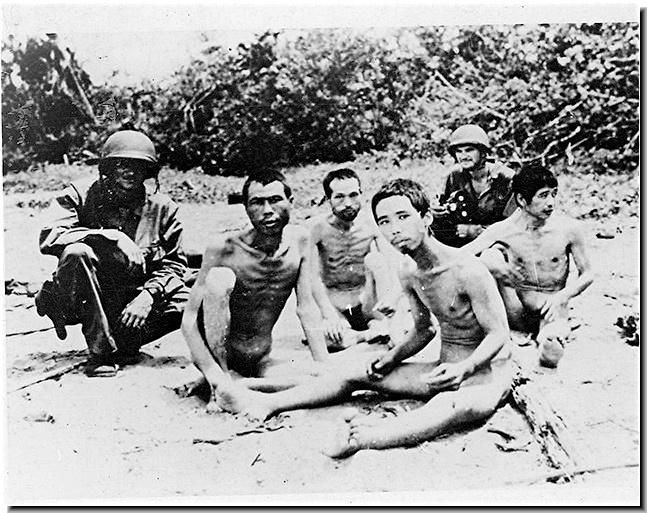
Japanese POW's on a beach.The four unclothed men in the picture were Japanese soldiers captured by the U.S. Army in New Guinea.

American soldiers in the Pacific often deliberately killed Japanese soldiers who had surrendered. According to Richard Aldrich, who has published a study of the diaries kept by United States and Australian soldiers, they sometimes massacred prisoners of war. Dower states that in "many instances ... Japanese who did become prisoners were killed on the spot or en route to prison compounds." According to Aldrich it was common practice for U.S. troops not to take prisoners. This analysis is supported by British historian Niall Ferguson,who also says that, in 1943, "a secret [U. S.] intelligence report noted that only the promise of ice cream and three days leave would ... induce American troops not to kill surrendering Japanese."

"We have this stereotypical idea that the Japanese were all cruel and robotic while the Allied forces were tough but fair in their treatment of the enemy. But I was very surprised by much of what I found and had to rethink all those stereotypes."
 "Oh, we could take more if we wanted to," one of the officers replied. "But our boys don't like to take prisoners.

U. S. historian James J. Weingartner attributes the very low number of Japanese in U.S. POW compounds to two important factors, a Japanese reluctance to surrender and a widespread American "conviction that the Japanese were "animals" or "subhuman'" and unworthy of the normal treatment accorded to POWs. The latter reason is supported by Ferguson, who says that "Allied troops often saw the Japanese in the same way that Germans regarded Russians—as Untermenschen."

U.S. Marines inspect bodies three Japanese soldiers killed  invasion Peleliu island Palau group  September 16, 1944.
U.S. Marines inspect the bodies of three Japanese soldiers killed in the invasion at Peleliu island at the Palau group, September 16, 1944. (AP Photo/Joe Rosenthal)

1943 diary of Eddie Stanton, an Australian posted to Goodenough Island off Papua New Guinea. 
"Japanese are still being shot all over the place," he wrote. "The necessity for capturing them has ceased to worry anyone. Nippo soldiers are just so much machine-gun practice. Too many of our soldiers are tied up guarding them."

Memoir of a New Zealand soldier working with a Fijian regiment who came across the bodies of two native women, pegged out on an earthen mound. They had been "raped to death" by Japanese soldiers. Then they found a dead American soldier who had stakes driven through each shoulder and his hands cut off. "As we moved away again, one of my corporals said to me: "No more prisoners, turaga[sir]." I agreed with him.''

Dead Japanese Soldier Surrounded by American Soldiers
A Dead Japanese Soldier Surrounded by American Soldiers

Ulrich Straus, a U.S. Japanologist, suggests that frontline troops intensely hated Japanese military personnel and were "not easily persuaded" to take or protect prisoners, as they believed that Allied personnel who surrendered, got "no mercy" from the Japanese. Allied soldiers believed that Japanese soldiers were inclined to feign surrender, in order to make surprise attacks. Therefore, according to Straus, "[s]enior officers opposed the taking of prisoners, on the grounds that it needlessly exposed American troops to risks..."When prisoners nevertheless were taken at Gualdacanal, interrogator Army Captain Burden noted that many times these were shot during transport because "it was too much bother to take him in".

References

Richard Aldrich: The Faraway War

Ben Fenton, "American troops 'murdered Japanese PoWs'" Daily Telegraph (UK), 06/08/2005)


John W. Dower, 1986, War Without Mercy

Niall Ferguson, "Prisoner Taking and Prisoner Killing in the Age of Total War: Towards a Political Economy of Military Defeat", War in History, 2004,

Ulrich Straus, The Anguish Of Surrender: Japanese POWs of World War II (excerpts) (Seattle: University of Washington Press, 2003 

Share this PostPin ThisShare on TumblrShare on Google PlusEmail This

VIETNAM WAR: Vietcong Tried To Entice American Soldiers To Cross Over

A little known episode of the Vietnam War is the attempts by the Vietcong to convince American soldiers to come over to their side by offering money and women. The motive? To learn about the American Army training methods.


Vietcong propaganda posters targeting American soldiers Vietnam War
 The basic message of these leaflets is, "Hey, American! This girl and $ 10,000 in cash. Live in comfort in Europe or Asia. You do not have to fight their own people. We need to cooperate with you, that you have trained. You can get some extra money, if you will help us to train or participate in intelligence programs."
North Vietnamese posters  girls money inducement

Vietcong pamphlet offer girls easy money

Posters offer  girl 10000 dollar reward American soldiers

Share this PostPin ThisShare on TumblrShare on Google PlusEmail This

Rape And Abuse of Japanese Women By American Soldiers During WW2

American soldiers Japanese girls WW2

“We too are an army of rapists,” 
anonymous soldier, letter to the editor, Time Magazine, November 12, 1945.

In Hollywood movies we have seen the bad man from the SS raping (or attempting to) a beautiful lady (French, British or American). Lately we are increasingly learning of the mass rape of German women by the Red Army hordes in 1945. We have heard of the bad black French colonial troops raping German women in Stuttgart in 1945. Now a lesser reported event of the brutal WW2..... Rape of Japanese women by GIs during the end of the war and during the occupation of Japan......

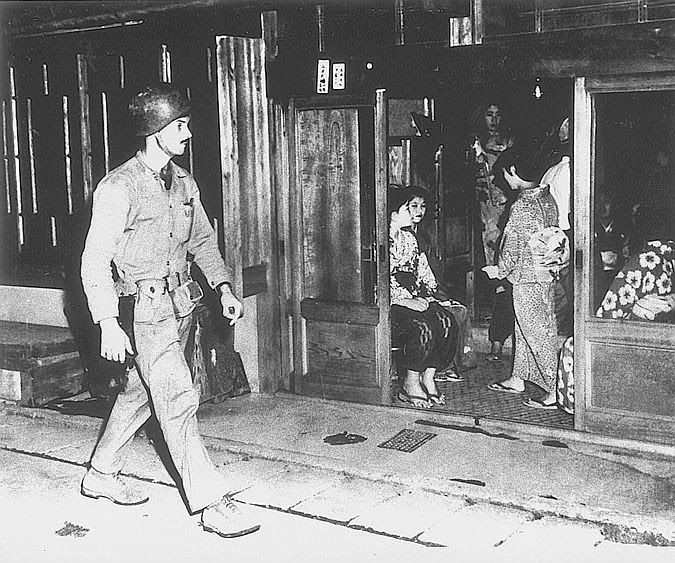
Japanese historian Oshiro Masayasu writes about the large scale rape by American soldiers in Okinawa in 1945. He reports the incident at a village in Motobu peninsula where GIs landed and found only women, children and old folks there. What followed was abominable. There was a hunt in broad daylight for Japanese women who were ravaged mercilessly.

Japanese brothel American soldiers Tokyo
There is no documentary evidence that mass rape was committed by Allied troops during the Pacific War. There are, however, numerous credible testimony accounts which allege that a large number of rapes were committed by US forces during the Battle of Okinawa in 1945.

Okinawan historian Oshiro Masayasu (former director of the Okinawa Prefectural Historical Archives) writes based on several years of research:

Soon after the U.S. marines landed, all the women of a village on Motobu Peninsula fell into the hands of American soldiers. At the time, there were only women, children and old people in the village, as all the young men had been mobilized for the war. Soon after landing, the marines "mopped up" the entire village, but found no signs of Japanese forces. Taking advantage of the situation, they started "hunting for women" in broad daylight and those who were hiding in the village or nearby air raid shelters were dragged out one after another.

According to Toshiyuki Tanaka, 76 cases of rape or rape-murder were reported during the first five years of the American occupation of Okinawa. However, this is probably not the true figure, as most cases went unreported.

In 1998 the remains of three U.S. Marines stationed on Okinawa were discovered outside of a local village. Accounts from elderly Okinawans claim that the 3 marines had made frequent trips to the village to rape the women that lived there, but were ambushed and killed by dozens of villagers with the help of 2 armed Japanese soldiers who were hiding in the jungle, in a dark narrow mountain pass near a river on one of their return trips. "The Japanese soldiers shot at the marines from the bushes and several dozen villagers beat them to death with sticks and stones." According to the same article, one academic claims that "rape was so prevalent that most Okinawans over age 65 either know or have heard of a woman who was raped in the aftermath of the war."

Source;
Yuki Tanaka/Toshiyuki Tanaka, Japan's Comfort Women: Sexual Slavery and Prostitution During World War II, p. 110-111.
--------------------------------
Some women were also raped when they went to US camps to receive food hand-outs. 
---------------------------------------------
According to a survey conducted by a feminist group in Okinawa – Okinawan Women Act Against Military Violence – US troops landed on Zamami Island, a small island west of the main island, and began raping women there in March 1945, shortly after they had landed. They abducted the women, carried them one by one to deserted coastal areas and gang-raped them. After being raped, the women were allowed to go. There is also a testimony that some Okinawan nurses and local women patients who had been admitted to the US Field Hospital were raped by US soldiers. One of the victims, a young girl patient, was raped by a GI in front of her father who was in the tent attending to her. These victims had nowhere to report the crime even if they had wished to do so, the Japanese police system of Okinawa having completely collapsed during the battle.

The rape of Okinawan women by American soldiers continued even after the war officially ended and there are many incidents in which American soldiers took young girls from civilian houses at gunpoint. These girls would later return with their clothes torn off. Some were even killed, although the perpetrators were never caught. As a result, villagers throughout Okinawa used a warning signal of banging on pots and pans to warn of approaching American troops. On hearing this, girls would hide until all was clear. Some women were also raped when they went to US camps to receive food hand-outs. During the first five years of the American occupation of Okinawa, 76 cases of murder or rape-murder were reported. This number was but the tip of the iceberg, as most cases went unreported.
Tanaka Page 133
---------------------------
Two rape cases were reported in Yokosuka on August 30, the day that the US marines landed there. At about 11:00 am, only a few hours after the landing began and three hours before General MacArthur stepped out of his plane at Atsugi airport, two marines on an “inspection tour” entered a civilian house in Yokosuka, and raped a 36-year-old mother and her 17-year-old daughter at gunpoint. About 6:00 pm that day, two other marines entered another home in Asahi-chd and found a housemaid at home alone. While one of the marines was on watch at the door, the other made lewd gestures and tried to grab her. In fear she fled upstairs. The marines followed and raped her in turn in a small room upstairs.


----------------------------------------

On August 31, a US Marine advance party landed at Tateyama in Chiba prefecture. Three days later the US occupation forces to be stationed in Chiba arrived there under the command of General A. Cunningham. On September 1, many small groups of marines from this advance party visited villages nearby and entered some public buildings and private houses, claiming that they were conducting “inspections.” The following are some of the incidents that occurred at that time and were eventually reported to the Adjutant General’s Office of the GHQ through the CLO:

1 Around 12:30 am on September 1, three American soldiers intruded in to
the house of Mr. B. I., [the details of the address], Awa district in Chiba
prefecture. These intruders showed something like a ten yen bank note to
the housewife N., 28 years old and claimed intimacy to her by making
gestures while upon receiving her flat refusal they brought her to the inner
room and raped her in succession.
2 At about 2:00 pm the same day another four American soldiers intruded
into the house of Mr. A. T., [the details of the address], the same village.
They threatened the wife, T. aged 30 as well as his mother and then chased
the three to the next room and one of the Americans violated T. in the first
place. But at that time another three American soldiers entered the
same house. They withdrew from the house without attaining their intended
purposes satisfactorily.
3 At the same hour on that day seven American soldiers while ransacking the
village office in Nishiki village, resorted to indecent acts such as touching
breasts of the girl clerks or rubbing their cheeks.
4 Another several Americans resorted to the same acts to the girl clerks in the
post office located in the same village

-----------------------------------------

  GANG RAPE BY AMERICAN SOLDIERS

About 6 o’clock, in the afternoon of September 1st, two American soldiers
in a truck forced two Japanese to guide them around the Yokohama city.
When they came to Shojikiro, at Eirakucho, Naka-ku they forced Miss
K. Y., aged 24, a maidservant, to board the truck against her will and
absconded to the US Barracks in Nogeyama Park. There altogether 27 of
the American soldiers violated her in turn and rendered her unconscious,
though she later recovered her consciousness through the care of some other
American soldiers and was sent home on September 2nd.


------------------------------------
There were also 1,336 reported rapes during the first 10 days of the occupation of Kanagawa prefecture after the Japanese surrender.

Source; 
Schrijvers, Peter (2002). The GI War Against Japan. New York City: New York University Press. p. 212. ISBN 0814798160.

For instance, rape--which is considered a way to sharpen aggressiveness of soldiers, steeling male bonding among warriors, and, moreover, "reflects a burning need to establish total dominance of the other" (p. 211)--was a general practice against Japanese women. "The estimate of one Okinawan historian for the entire three-month period of the campaign exceeds 10,000. A figure that does not seem unlikely when one realizes that during the first 10 days of the occupation of Japan there were 1,336 reported cases of rape of Japanese women by American soldiers in Kanagawa prefecture alone" (p. 212).


GI war against Japan
Page 211
Page 212


-----------------------------
RAPE OF JAPANESE WOMEN IN MANCHURIA BY RUSSIAN SOLDIERS

Many Japanese women in Manchuria were raped during and after World War II. Japanese women in Manchuria found life difficult after Soviet troops entered Manchuria near the end of the war. Many of those women were used as "dolls" -- sexual objects. There are many accounts of several Japanese women who were raped or almost raped. In one account, a young girl threw herself out a three-story window to avoid being raped by Soviet troops. Another account demonstrated how not only Soviet troops but also Chinese civilians tried to rape Japanese women. A Chinese man came to a woman's house and asked her to give him her two daughters because his daughters were raped by Japanese soldiers. The woman offered herself instead, but the man changed his mind. Japanese men offered some Japanese women as female Kamikaze troops to Soviet troops to protect their community and other Japanese women and children. Once women were raped, they were no longer part of their community and were often rejected by their husbands.
-------------------------------------------
RAPE AND SEXUAL ABUSE OF JAPANESE WOMEN IN THE POST WAR PERIOD

“We too are an army of rapists,” anonymous soldier, letter to the editor, Time Magazine, November 12, 1945.

American soldier enjoy life occupied Japan


Immediately after the Japanese surrendered in 1945, the Japanese Ministry of the Interior made plans to protect Japanese women in its middle and upper classes from American troops. Fear of an American army out of control led them to quickly establish the first “comfort women” stations for use by US troops. By the end of 1945, the Japanese Ministry of Home Affairs had organized the Recreation Amusement Association (R.A.A.), a chain of houses of prostitution with 20,000 women who serviced occupation forces throughout Japan. (Many more women known as panpan turned to prostitution in the struggle to survive in the midst of the postwar devastation.) Burritt Sabin of the Japan Times reported in 2002 that just days before the R.A.A. was to open, hundreds of American soldiers broke into two of their facilities and raped all the women. The situation prompted MacArthur and Eichelberger, the two top military men of the U.S. occupation forces, to make “rape by Marines” their very first topic of discussion. Yuki Tanaka notes that 1300 rapes were reported in Kanagawa prefecture alone between August 30 and September 10, 1945, indicative of the pervasiveness of the phenomenon in the early occupation.

Historian Takemae Eiji reports that
. . . US troops comported themselves like conquerors, especially in the early weeks and months of occupation. Misbehavior ranged from black-marketeering, petty theft, reckless driving and disorderly conduct to vandalism, assault arson, murder and rape. . . . In Yokohama, Chiba and elsewhere, soldiers and sailors broke the law with impunity, and incidents of robbery, rape and occasionally murder were widely reported in the press. 

Two weeks into the occupation, the Japanese press began to report on rapes and looting. MacArthur responded by promptly censoring all media. Monica Braw, whose research revealed that even mention of the atomic bombing of Hiroshima and Nagasaki, and particularly the effects of the bomb on civilians, were censored, maintains that pervasive censorship continued throughout the occupation years. "It [censorship] covered all means of communications and set up rules that were so general as to cover everything. It did not specify subjects prohibited, did not state punishment for violations, although it was clear that there were such punishments, and prohibited all discussion even about the existence of the censorship itself."

Censorship was not limited to the Japanese press. MacArthur threw prominent American journalists such as Gordon Walker, editor of the Christian Science Monitor, and Frank Hawley of the New York Times out of Japan for disobeying his orders. Even internal military reports were censored.

Five months after the occupation began, one in four American soldiers had contracted VD. The supply of penicillin back in the U.S. was low. When MacArthur responded by making both prostitution and fraternization illegal, the number of reported rapes soared, showing that prostitution and the easy availability of women had suppressed incidents of rape.

John Dower writes in his Embracing Defeat: Japan in the Wake of World War II that while the U.S./Japanese-sponsored brothels were open “the number of rapes and assaults on Japanese women were around 40 a day,” but after they were closed, the number rose to 330 a day.

Yuki Tanaka records two major incidents of mass rape around the same time. On April 4, fifty GIs broke into a hospital in Omori and raped 77 women, one a woman who had just given birth, killing the two-day-old baby by tossing it onto the floor. On April 11, forty U.S. soldiers cut off the phone lines of one of Nagoya’s city blocks and entered a number of houses simultaneously, “raping many girls and woman between the ages of 10 and 55 years.”

If these incidents are in any sense indicative, how are we to understand the fact that reports in U.S. archives about rape in postwar Japan are sparse: General Eichelberger issued three documents during the first year of the Japanese occupation admonishing the troops about their behavior, citing looting, rape and robbery. General Eisenhower ordered a report about troop behavior on Japan and the Philippines in 1946. (The National Archives has the report’s cover sheet, but not the report.) Albert Hussey, one of the framers of the Japanese constitution, mentions the rise of “institutional rape.” Under the cover of screening for venereal diseases, young women getting home from work were arrested in the subway or in the streets, pressed to have relations and/or examined by Japanese doctors in the presence of soldiers. Rape continued during the occupation as indicated by the plea reported in the NY Times April 21, 1952, from a prominent woman leader, Ms. T. Uyemura, to Mrs. Ridgway, wife of MacArthur's replacement, General Ridgway, asking her husband to isolate the immoral US troops.

Recorded courts-martial for rape during the occupation are few. The Judge Advocate General’s Board of Review for the year 1946, when the R.A.A. closed, shows only 6 courts-martial.  The Return of General Prisoners from the 8th Army stockade in Tokyo, where all GI prisoners were incarcerated prior to being returned to the U.S., lists 6 soldiers sentenced for rape during spring 1946.26 The Index to the Board of Review Opinions of the Branch Office of the JAG (1942-1949) shows only two courts-martial listed during the same period.

French researcher Bertrand Roehner has made available the texts of hundreds of directives from the Supreme Commander of the Allied Powers to the Japanese government (called SCAPs, SCAPINS or SCAPINs) that reveal much more sexual violence occurred than has ever been acknowledged, a small window onto what went on behind MacArthur’s wall of censorship.

For example, the SCAPIN of August 31, 1949 is illustrative of another tactic MacArthur used to suppress reports of rape and other crimes by occupying forces. It shows that five Japanese were sentenced to hard labor “for spreading rumors derogatory to occupation forces” when American soldiers were accused of raping Japanese women. Another instance of this policy is noted by Takamae Eiji:

American soldier unhappy Japanese girl Occupied Japan after WW2


When US paratroopers landed in Sapporo, an orgy of looting, sexual violence and drunken brawling ensued. Gang rapes and other sexual atrocities were not infrequent. Victims of such attacks, shunned as outcasts, sometimes turned in desperation to prostitution; others took their life rather than bring shame to their families. Military courts arrested relatively few soldiers for these offenses and convicted even fewer, and restitution for the victims were rare. Japanese attempts at self-defense were punished severely. In the sole instance of self-help that General Eichelberger records in his memoirs, when local residents formed a vigilante group and retaliated against off-duty GIs, Eighth Army ordered armoured vehicles in battle array into the streets and arrested the ringleaders, who received lengthy prison terms.

My uncle, Don Svoboda, unwittingly introduced me to this subject. He committed suicide in 2004, leaving behind audiotapes that spoke of the building of a gallows in Tokyo’s 8th Army stockade where he served as an M.P. in 1946. In trying to discover whether an execution he had witnessed decades earlier had anything to do with his suicide, I interviewed many veterans who had served in the stockade. Five of them remembered “a colored boy” being executed for rape in May; none of them remembered his name; two thought there was more than one execution. No records from the 8th Army stockade report any executions, and neither Truman nor MacArthur signed any military execution papers during 1946, the year that the soldiers remember the hanging. In addition, no records speak of the use, or even the building of the very large gallows that all the vets remembered, including soldiers who were just passing through on their way to Korea in 1952, just before it was dismantled.
American soldiers Japanese women Occupation after WW2 end
AMERICAN SOLDIERS PHOTOGRAPH JAPANESE WOMEN IN OCCUPIED JAPAN
If courts-martial for rape went under reported, perhaps so too did trials, prison sentences and executions for rape. In particular, keeping executions secret would be a logical extension of MacArthur’s use of censorship. Did MacArthur order executions to send a message to the troops in order to bring rape under control but conceal it from the public and the press? The MPs assumed the execution(s) were approved. Did MacArthur sign the execution papers and then have them destroyed? Were the executions handled extra-judicially by one of MacArthur’s subordinates? James Zobel, the MacArthur Memorial archivist, referred to MacArthur’s righthand man, General Willoughby, who was head of Intelligence in Japan, as a “burner.” An index at the National Archives contains a letter from a Mr. Leon Guess “concerning the number of Negro soldiers executed as a result of courts-martial” dated July 7, 1946, about the time it would take for news of a May execution to get back to the States, but there’s only the index notation, no letter, the only one missing in the file.

J. Robert Lilly, who has written extensively on executions of black soldiers during WWII, discovered that questioning the families of dead soldiers did not necessarily determine whether a soldier had been executed because sometimes the military reported deaths due to other causes. In trying to trace the executed men, I found that pursuing the records of soldiers who died in occupied Japan was also fruitless. No soldiers were buried in Japan, and those executed are not distinguished from those who died accidentally or from natural causes. In addition, many of the 202 Americans cremated in Japan are among those listed as unknown. An examination of chaplains’ and physicians’ records regarding executions also reveals no relevant material. Emailing and writing to the historian at the 8th Army Public Affairs office in Yongsan, Korea was met with silence. Files around the subject of executions during the occupation consulted at the National Archives sometimes contain lists of the contents but no contents, a situation confirmed by Roehner’s experiences at the Archives in the US and in Japan.

Although Roehner maintains that a kind of “omerta” surrounds occupation records worldwide, there are other possible explanations for some of the omissions. The 1973 National Archives fire offers one possible explanation for the lack of documentation regarding soldiers’ records--at least it is most often cited. The Bush Administration’s funding cuts to the National Archives make it very difficult for archivists to process or even become familiar with the huge holdings. Many of the occupation files in the National Archives are filed either with WWII or Korean War papers—but sometimes at the beginning of administrative files marked 1950, which makes them difficult to locate.

According to my uncle, most of the serious offenders in the 8th Army stockade were black. Alice Kaplan writes in The Interpreter, a book that discusses the discrepancies in sentencing between black and white servicemen convicted of rape in the European theater, that black troops who made up 8.5 percent of the armed forces during WWII were accused of committing 79 percent of all capital crimes. Lilly reports that while 57% of the soldiers accused of sexual offenses in Europe were white, most of the convicted were black, some 66%. “It is quite possible that the complaints against black soldiers were those the army selected to record, thus indirectly creating an incomplete and inaccurate account,” he writes. They were also more likely to be tried because of commander prejudice, many commanders being Southerners. Although white and black soldiers were convicted of rape in both theaters during the war, only black servicemen were executed for this crime. Racial prejudice at a time when lynching was frequent in civilian life in the south and the military remained segregated is censorship’s “elephant in the room.”

The US government, with Japanese collaboration, has suppressed important information about crime and punishment during the occupation: it has concealed the numbers of rapes and the identity of the perpetrators; it has concealed the prosecutions, arrests and executions for rape and other crimes. There is reason to believe that the information is not only politically charged in terms of the US-Japan relationship, but that it is racially charged. Specifically, the extreme punishment of blacks charged with rape—in several cases including execution—is a reminder of the Jim Crow justice of an earlier era.

This is a revised and expanded version of a paper presented at The American Society for Legal History, Ottawa, November 2008.
-----------------------------------------------------

COMFORT WOMEN FOR AMERICAN SOLDIERS IN JAPAN


In the week following its surrender, and before occupation forces arrived, the Japanese government had discussed ways of dealing with the anticipated problem of sexual violence by occupation forces. On August 21, Prime Minister Prince Higashikuni Naruhiko called a special meeting of several of his ministers. The subject of discussion was the various demands put forward by the Allied forces regarding the actual procedures for ending the war. The details of these demands were brought back by Lieutenant-General Kawanabe Torashird, an envoy extraordinary, who had just returned to Tokyo that morning from a meeting with the military commanders of the Allied forces in Manila in the Philippines.

At this cabinet meeting, Prince Konoe Fumimaro, then Deputy Prime Minister, who had served as Prime Minister three times during the Asia-Pacific War, expressed grave concern about the possibility of “mass rape” of Japanese women by Allied troops. He suggested setting up a comfort women system to protect Japanese women and girls. The suggestion seemed to come out of his anxiety over the possibility of “mass rape” such as that committed by Japanese troops against civilians in occupied territories during the war.


------------------------------------------
RECRUITMENT POSTER BY THE JAPANESE GOVERNMENT

Announcement to New Japanese Women! We require the utmost co-operation of new Japanese women who participate in a great project to comfort the occupation forces, which is part of the national emergency establishment of the postwar management. Female workers, between 18 and 25 years old, are wanted. Accommodation, clothes and meals, all free.
-----------------------------------------------------------------------------------


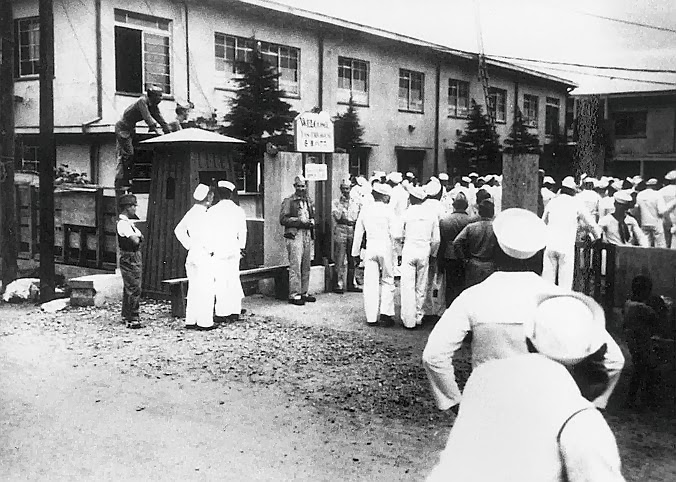
American sailors throng Japanese comfort women house
American sailors throng a Japanese comfort women house


THE IGNOMINY OF A DEFEATED JAPAN: POLICE ORGANISED BROTHELS FOR AMERICAN TROOPS

On August 18, 1945 the Police and Security Department of the Ministry of Home Affairs telegraphed the following instructions to the governors and police chiefs of all prefectures:


With regard to the comfort facilities in areas where the foreign troops are going to be stationed:

In the areas where foreign troops will be stationed, the establishment of comfort facilities are necessary as outlined in the following separate notation. As the handling of this matter requires circumspection, please take every possible precaution by paying attention particularly to the following items.


1 It is still beyond speculation where the foreign troops will be stationed
and when they will arrive. Therefore, do not cause public unrest by
forming a hasty conclusion that it is inevitable for those troops to advance
to your prefecture.
2 Make preparation of such facilities now confidentially as their prompt
establishment is required in the case of the troops’ station, but ensure
that the information not be revealed to the outside.

3 In carrying out this plan, avoid arousing misunderstanding among local
people by explaining to them that this scheme will be implemented for
the purpose of protecting Japanese citizens.
The outline of the preparation for the establishment of comfort facilities for the foreign troops:
1 Allow the business for the foreign troops within limited quarters, regardless
of existing regulations of control.
2 The above-mentioned limited quarters should be determined by the
[prefectural] police chief, and prohibit Japanese subjects from using the
facilities.
3 The police chief should actively give guidance in management of the
following facilities and promote their rapid expansion.
Sexual comfort facilities
• Eating and drinking facilities
• Recreation centres
4 Recruit the women required for the business from geisha, licensed and
unlicensed prostitutes, waitresses, barmaids, habitual illicit prostitutes
and the like.
----------------------------------------------
Long after night fall, GIs heard the sound of an approaching truck. When it was within hailing distance, one of the sentries yelled “Halt!” The truck stopped, and from it emerged a Japanese man, with a flock of young women. Warily, they walked towards the waiting GIs. When they came close, the man stopped, bowed respectfully, swept the ground behind him with a wide, generous gesture, and said: “Compliments of the Recreation and Amusement Association!” 
---------------------------------------------

American soldier visits Japanese brothel

Comfort women were subject to numerous instances of sexual violence. For example, on the evening of September 4, three Australian soldiers visited a comfort station at Higashiyama in Kyoto. They were apparently former POWs who had been released from a POW camp somewhere in Japan and were staying at a hotel in Kyoto, waiting to be repatriated. After they were entertained at this station, they insisted on being accompanied by three comfort women to their hotel, where their fellow Australian soldiers were staying. The manager of the station refused the request. However, they forcibly took the women away, shouting at the manager that “Japan lost the war and your police have no power at all!” At the hotel, the women were confined to one room and gang-raped by seven drunken former POWs. In the following morning these women were sent back to the comfort station. The Australian men apparently kept the women’s underwear kimonos.
-------------------------------------------------------------------


Suggested Reading

Japan comfort women Yuki Tanaka book

Japan's Comfort Women: Sexual Slavery and Prostitution during World War II and the US Occupation  By Toshiyuki Tanaka
RAPE BY JAPANESE  SOLDIERS (AND LATER OCCUPYING AMERICAN SOLDIERS)
Japan's Comfort Women tells the harrowing story of the "comfort women" who were forced to enter prostitution to serve the Japanese Imperial army, often living in appalling conditions of sexual slavery. Using a wide range of primary sources, the author for the first time links military controlled prostitution with enforced prostitution. He uncovers new and controversial information about the role of the US' occupation forces in military controlled prostitution, as well as the subsequent "cover-up" of the existence of such a policy. This groundbreaking book asks why US occupation forces did little to help the women, and argues that military authorities organised prostitution to prevent the widespread incidence of GI rape of Japanese women, and to control the spread of sexually transmitted diseases.
-------------------------------------------------------------
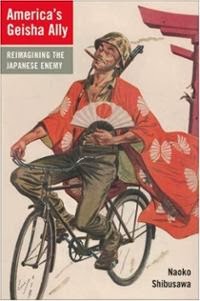

America's Geisha Ally: Re-Imagining the Japanese Enemy Naoko Shibushawa
---------------------------------------------------

Embracing Defeat Japan in the Wake of World War II John Dower book

------------------------------------------------------------

RELATED

Rape Of French Women By American Soldiers During WW2

Rape of German Women During WW2 (Eyewitness Account)

Rape of German Women When The Country Lost The War

Mass rape of German Women

Rape By German And Waffen SS

Rape And Abuse Of Asian Women By Japanese Soldiers During WW2
Share this PostPin ThisShare on TumblrShare on Google PlusEmail This
Related Posts Plugin for WordPress, Blogger...
Advertisement

Popular Articles On This Site

UncensoredHistory.blogspot.com

UncensoredHistory.blogspot.com